Crawl space dehumidifier size depends on moisture load, not floor area alone. Learn how to compare pint ratings, account for sealing and climate, and verify that a unit can hold humidity after installation.
Use an AI assistant to explore the article
Choose an assistant. The article link and a ready-to-use summary prompt will be copied automatically.
 ChatGPT
 Gemini
 Claude
 Perplexity
 Grok
Table of contents
The right crawl space dehumidifier size is based on moisture load, not just square footage. A sealed crawl space with a continuous ground vapor barrier may need a much smaller capacity class than the same-size space with open vents, humid outdoor air, damp soil, or an unresolved water problem.
As a planning starting point, published seller guides commonly place a sealed, moderate-moisture crawl space near 50–80 PPD for about 1,000 square feet, while larger or wetter spaces are often placed in higher capacity classes. Those numbers are not interchangeable across brands. Before buying, confirm whether the PPD figure is based on the same test rating as the competing unit and account for your crawl space’s sealing, temperature, climate, drainage, and layout. Crawlspace Depot’s sizing guide is one example of a seller guide that treats moisture conditions and encapsulation as sizing variables.
A dehumidifier controls water vapor in air. It does not stop rainwater, groundwater, a plumbing leak, or condensate from an HVAC problem. If water keeps entering the crawl space, correct that source before treating dehumidification as the solution.
The short answer: size by moisture load, not square footage alone
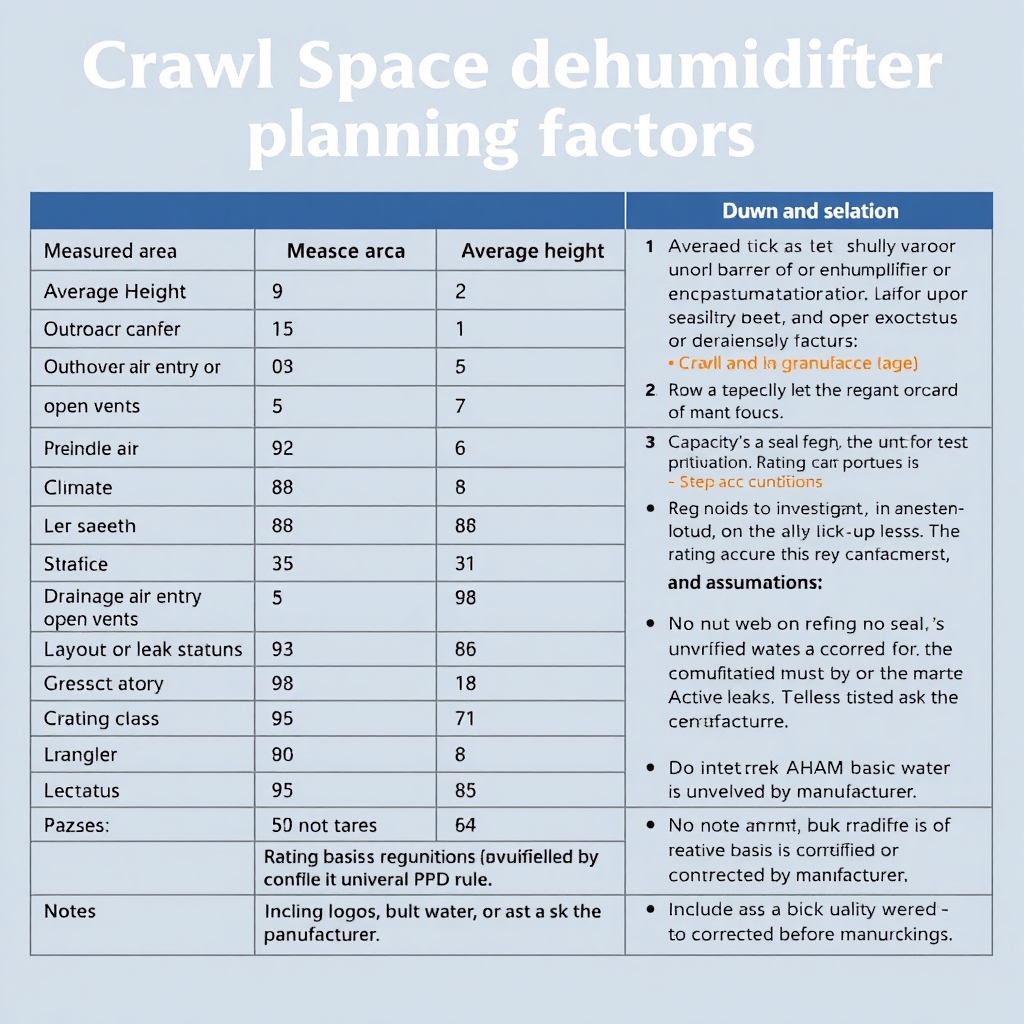
Square footage is a useful starting measurement, but it cannot tell you how much water vapor is entering the space every day. A practical sizing decision needs these inputs:
- Crawl space floor area and average height
- Several days of relative humidity (RH) readings
- Whether the crawl space has a continuous ground vapor barrier and is sealed as an assembly
- Whether foundation vents are open or outdoor air is entering through other gaps
- Local weather and seasonal humidity
- Evidence of drainage, groundwater, plumbing, or HVAC moisture problems
- Layout restrictions that keep dry air from reaching part of the space
Published size charts disagree because their assumptions differ. One may assume a sealed crawl space in moderate conditions. Another may assume a vented or very damp space. A third may use a larger maximum-capacity number instead of a standardized rating. Use a chart to narrow the field, then compare models on the same rating basis.
Before you size anything: confirm a dehumidifier is the right next step
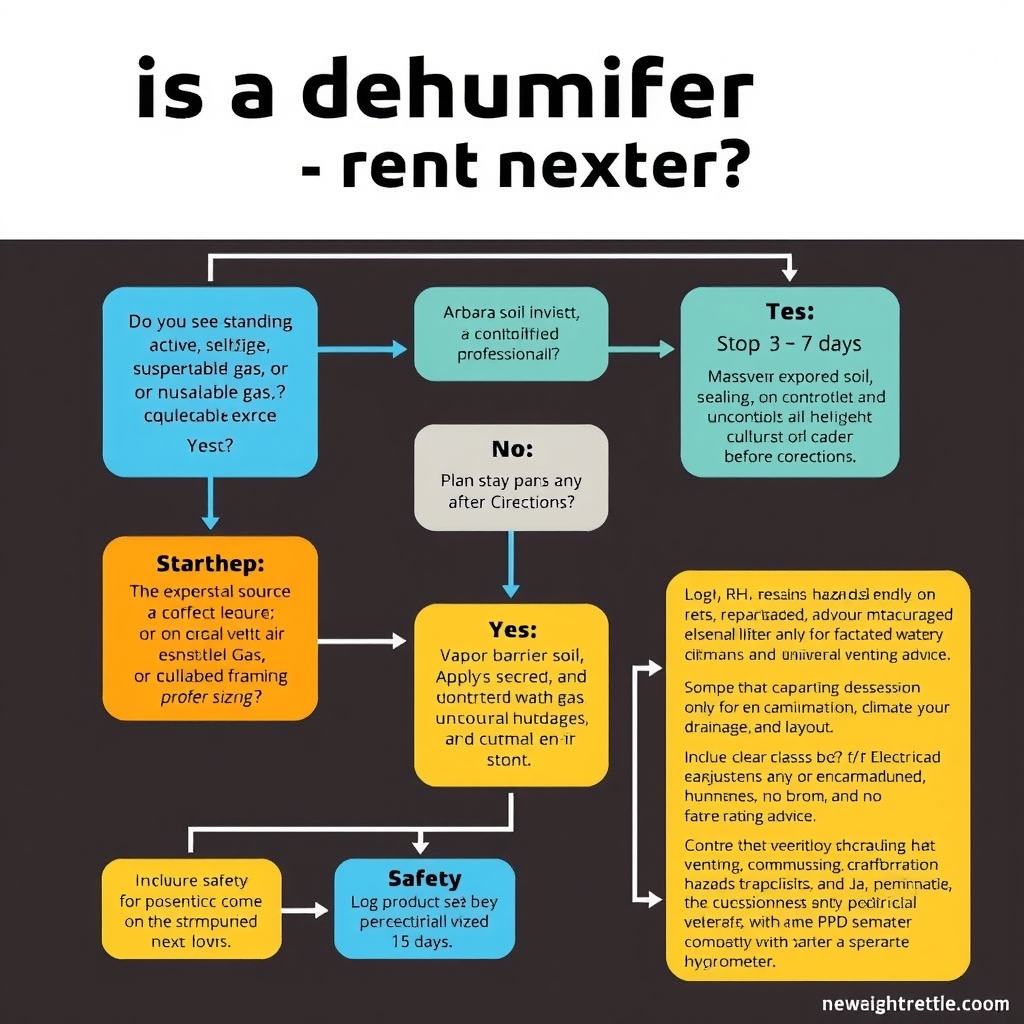
Start by identifying what you are seeing. Bulk liquid water, ground vapor, humid outside air, and condensation can all make a crawl space look damp, but they need different responses. Our wet crawl space guide can help you sort the symptoms before you shop for equipment.
Bulk water, leaks, and drainage versus humid air
Bulk water means water you can see collecting, flowing, or standing on the crawl space floor. Water that appears after rain may point to surface runoff, poor drainage, or groundwater conditions. Water that continues through dry weather can point to a plumbing leak, HVAC condensate issue, or another source that needs closer evaluation.
Relative humidity is the amount of water vapor in air relative to the maximum it can hold at that temperature. A dehumidifier lowers humidity by removing water vapor. It may help a damp-smelling crawl space with high RH, but it will not repair a broken pipe or drain a puddle.
Condensation is another separate clue. Moisture on cold ducts, pipes, or surfaces can occur when humid air contacts a surface below the air’s dew point. That may call for checking duct insulation, air leaks, or the moisture source rather than simply selecting a larger dehumidifier.
Do not enter a crawl space with standing water near electrical equipment. Stay out of sewage-affected or contaminated water, leave suspected gas hazards alone, and seek qualified help for unstable framing, substantial visible deterioration, or an active leak.
Sealed vs. vented: why the vapor barrier changes the load
A ground vapor barrier, also called a ground vapor retarder, helps reduce moisture moving from exposed soil into the crawl space. Encapsulation generally adds wall coverage and air sealing to create a more controlled crawl space assembly. These measures can reduce the moisture load before they change the dehumidifier capacity you need.
A vented crawl space can receive humid outdoor air, particularly during warm, humid weather. But do not assume every crawl space should have its vents closed. Venting, insulation, combustion-air needs, radon considerations, and local requirements can vary. Sealing vents without addressing the ground, walls, and other assembly details can create new moisture problems rather than solve existing ones.
When a dehumidifier is the wrong purchase right now
Pause before buying a unit when you find any of the following:
- Active water entry, standing water, recurring rain-related flooding, or an unresolved drain or sump problem
- A plumbing or HVAC leak that has not been repaired
- Exposed soil with no ground vapor barrier
- A crawl space that remains intentionally vented under a local or building-specific design
- Visible material damage, soft framing, or suspected rot that needs on-site evaluation
- Extensive, recurring, or contaminated visible growth that requires moisture-source correction and may need qualified assessment
A dehumidifier can be part of a moisture-control plan. It is not a substitute for drainage, leak repair, vapor control, or necessary remediation.
What pints per day (PPD) actually means
PPD means pints of water a dehumidifier can remove per day under stated test conditions. The test conditions matter because refrigerant dehumidifiers do not remove the same amount of moisture in every temperature and humidity condition.
AHAM-style standard conditions vs. saturation rating
You may see two different capacity figures for what looks like a similar unit. One may be a standardized, AHAM-style rating; another may be a maximum or saturation rating measured under much wetter conditions. The larger number is not automatically the better sizing number.
When comparing equipment, ask the manufacturer or contractor:
- What rating basis supports this PPD number?
- What are the stated test conditions?
- Is the competing unit rated on the same basis?
- What capacity should I expect at typical crawl space temperatures?
If the rating basis is unclear, do not treat two printed PPD numbers as equal. This is one reason the recommendations in seller guides can look contradictory.
Why the bigger number on the box is not the sizing number
Manufacturer square-foot coverage claims also vary. Blower design, airflow, cabinet design, test assumptions, and the condition of the space can all affect a coverage claim. Treat a coverage figure as a manufacturer specification, not as proof that a unit will control humidity in every crawl space of that size.
Cooler air can reduce real-world moisture removal for refrigerant equipment. In a cold crawl space, ask whether the unit has an appropriate defrost strategy, such as hot-gas bypass defrost, and whether the manufacturer provides performance information for cooler conditions. Desiccant equipment is another type to discuss where cold-weather operation is a major concern.
How to measure your crawl space safely
You do not need to diagnose the entire crawl space yourself to collect useful sizing information.
- Measure floor area. Measure length times width for each rectangular section. Add sections together for an L-shaped or divided crawl space.
- Measure average height. Take several height measurements if the ground slopes or the foundation steps down. Add them and divide by the number of readings.
- Calculate approximate volume. Multiply floor area by average height. Volume does not determine PPD by itself, but it helps identify unusually large air volume and airflow challenges.
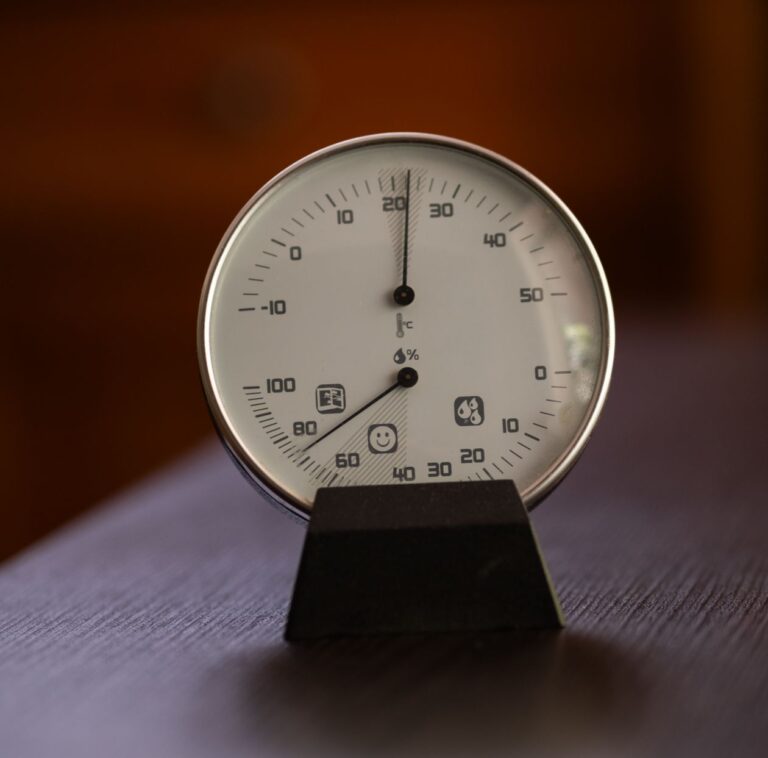
- Log humidity. Place a hygrometer or data logger away from direct outdoor openings, dripping water, and the discharge air of an existing dehumidifier. Record RH for several days, including humid or rainy weather if possible.
- Map access and obstructions. Note interior foundation walls, low-clearance sections, ductwork, and separate bays that may block airflow.
Use a flashlight and do not work alone in a tight crawl space. Do not enter standing water, touch electrical equipment, or crawl through contaminated material.
A factor-based sizing method
This is a planning method, not a guarantee or an engineering calculation. Its purpose is to help you compare a contractor proposal or narrow a product class without pretending that floor area alone gives a precise answer.
Step 1: start with conditioned area and a base capacity
Use the floor-area bands below only as a planning starting point for a crawl space with no active liquid-water problem. The figures reflect the broad capacity classes commonly used in published seller sizing guides, not a universal PPD-per-square-foot rule. Verify the rating basis on every actual model.
| Crawl space area | Planning starting point | Important assumption |
|---|---|---|
| Under 1,000 sq ft | Compare purpose-built units in roughly the 50–80 PPD class | Moderate moisture; capacity labels must use the same rating basis |
| About 1,000 sq ft | Often a 50–80 PPD starting class | A sealed space can differ substantially from a vented or damp one |
| About 2,000 sq ft | Compare higher-capacity classes; published guidance varies widely | Layout, outdoor-air entry, and climate often decide the result |
| 3,000+ sq ft | Evaluate capacity and air distribution together | One large unit may not serve isolated areas well |
For example, Crawl Space Ninja describes 70–80-pint capacity as typical for a 1,000-square-foot crawl space, while other seller guides use different ranges or assumptions. That variation is the reason to ask what the recommendation assumes rather than treating a single chart as a rule.
Step 2: adjust for encapsulation and vapor barrier status
A crawl space with a continuous ground vapor barrier and a well-executed sealed assembly generally has less moisture entering from soil and uncontrolled outdoor air. Start at the lower end of the appropriate capacity class only if your humidity readings support that choice.
With exposed soil, incomplete ground coverage, open vents, or major air leaks, do not solve the problem by automatically buying the largest unit. Correcting vapor and air pathways can be more important than increasing capacity.
Step 3: adjust for climate and unconditioned outdoor air
Warm, humid or coastal conditions can raise the moisture load when outdoor air enters the crawl space. In those conditions, move toward the upper end of a planning class or compare the next capacity class after confirming the rating basis.
Cold or dry outdoor conditions change the picture, but cold air can also reduce the output of refrigerant dehumidifiers. Climate is not a substitute for measured RH and a review of the crawl space assembly.
Step 4: adjust for unresolved drainage or unusual site moisture
Do not size as though a drainage problem is fixed when it is not. If rainwater, groundwater, or a leak is contributing moisture, the sensible next step is source correction and drainage planning. A larger dehumidifier may run constantly without addressing the cause.
Step 5: adjust for layout and airflow obstructions
A long, L-shaped, partitioned, or low-clearance crawl space can have humid dead spots even when the unit’s stated capacity looks adequate. In that case, two units or a ducted approach may be more effective than one larger unit located at one end.
Step 6: round up only after upstream conditions are addressed
Once water entry, vapor control, and major air leaks are addressed, choosing the next suitable capacity class can provide a reasonable margin. Bigger is not automatically better. An oversized unit can cycle inefficiently in a low-load space, while a very large unit may hide continuing air or water problems instead of prompting correction.
Why published crawl space dehumidifier size charts disagree
A 1,000-square-foot crawl space may be described as needing 50–80 PPD in one guide and 90–110 PPD in another. Neither statement is useful without its assumptions.
| Hidden assumption | Why it changes the recommendation |
|---|---|
| Rating basis | A maximum or saturation rating is not directly comparable with a standardized rating. |
| Sealed versus vented | Open vents and air leaks can bring in outdoor moisture. |
| Ground coverage | Exposed soil can add ground vapor load. |
| Climate | Humid weather can increase the amount of water vapor entering the space. |
| Temperature | Cooler conditions may reduce refrigerant-unit capacity. |
| Layout | Airflow restrictions can leave part of the crawl space humid. |
| Vendor sizing philosophy | Some sellers recommend more reserve capacity than others. |
The useful question is not “Which chart is right?” It is “Which chart describes my crawl space, and are the listed PPD figures measured the same way?”
Worked examples
These examples show the decision process, not a promised equipment size.
Small encapsulated crawl space (under 1,000 sq ft)
A 750-square-foot crawl space with an average height of 3 feet has an approximate volume of 2,250 cubic feet: 750 × 3 = 2,250.
If it has a continuous vapor barrier, a sealed access door, no standing water, and RH readings that are only moderately elevated, begin by comparing the lower portion of the 50–80 PPD planning class. Confirm the rating basis and make sure the unit can operate at the measured crawl space temperature. If RH remains high in a separate rear bay, airflow may be the limiting factor.
1,000 sq ft crawl space
A 1,000-square-foot crawl space with a 3-foot average height is about 3,000 cubic feet: 1,000 × 3 = 3,000.
For a sealed crawl space with ground coverage and no water entry, 50–80 PPD is a reasonable published planning class to investigate. For the same footprint with open vents, exposed soil, humid outdoor conditions, and elevated multi-day RH readings, move to the upper end or compare the next capacity class only after addressing the vapor barrier and air-entry issues. The goal is not to dehumidify an open moisture pathway forever.
2,000 sq ft crawl space
A 2,000-square-foot crawl space at 3 feet average height has about 6,000 cubic feet: 2,000 × 3 = 6,000.
At this scale, do not rely on an area claim alone. A sealed, open-layout crawl space may work with one properly rated higher-capacity unit. A hot-humid, divided, or partially vented crawl space may need a larger capacity class, two units, or ducted distribution. Compare the actual PPD rating basis and the unit’s airflow information before deciding.
3,000+ sq ft or partitioned crawl space
For a 3,200-square-foot crawl space with a 3-foot average height, the air volume is roughly 9,600 cubic feet: 3,200 × 3 = 9,600.
Map the space before choosing one large unit. Interior walls, equipment rooms, or narrow connections can isolate sections. Two smaller units can offer better distribution and redundancy, while ducting may suit a system designed for it. The best choice depends on access, drain routes, service space, and whether air can actually circulate between sections.
Airflow and placement are co-equal variables
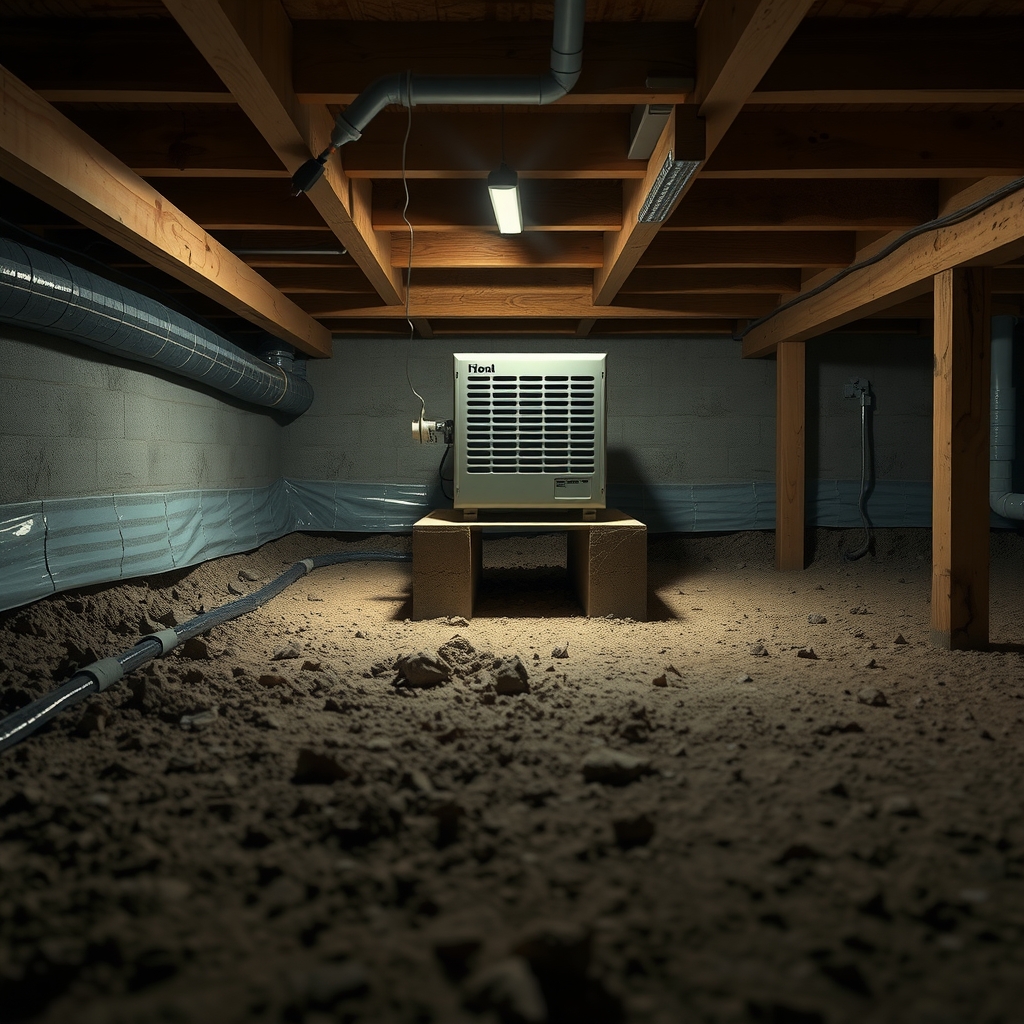
A dehumidifier needs to move dry air through the crawl space, not simply remove moisture beside its cabinet. Place it where it can be serviced and where its intake and discharge are not blocked. Keep it away from an area that could flood, and follow the manufacturer’s clearance instructions.
For an open crawl space, a central location may help. In a long or divided space, point discharge toward harder-to-reach areas only when the manufacturer’s layout permits it. If a remote section remains humid, investigate whether a ductable unit, a second unit, or an airflow plan is more appropriate than simply upsizing capacity.
LGR vs. desiccant and cold crawl space behavior
Low-grain refrigerant (LGR) units and other refrigerant dehumidifiers are common for crawl spaces, but their moisture removal can decline as air gets cooler. Ask about defrost operation and low-temperature performance instead of assuming nameplate PPD applies year-round.
Desiccant dehumidifiers work differently and may be worth discussing where cold conditions are a persistent concern. Their tradeoffs, electrical demand, installation requirements, and suitability should be reviewed using current manufacturer documentation.
A regular household portable unit may not be designed for continuous, low-clearance, damp crawl space service. If considering one, compare its drainage arrangement, temperature operating range, duty-cycle expectations, and service access with a purpose-built crawl space model.
Condensate drainage and electrical safety
A dehumidifier only works while collected water can leave the unit safely.
Continuous drain vs. condensate pump
A gravity drain line can work when it has a reliable downward route to an appropriate discharge point. A condensate pump can lift water where gravity drainage is not available. Either setup can fail because of kinks, clogs, a failed pump, freezing, or an unsuitable discharge location.
Ask where water will go, how the line will be supported, how it will be protected from freezing where relevant, and how you will be able to inspect it. A full internal reservoir or failed drain stops moisture removal.
Electrical considerations and when to call a qualified electrician
Keep the unit out of standing water and provide enough clearance to inspect the cord, drain, filter, and controls. Do not run extension cords through a wet crawl space or perform your own wiring work. Electrical circuit capacity, receptacle protection, and GFCI requirements depend on the installation and local rules. Use a qualified electrician when a new circuit, receptacle, or other electrical work is needed.
Setpoint and commissioning: how to verify the size was right
Many crawl space plans aim to keep RH in a moderate range, often around 45–55% and below 60%, but the appropriate target depends on the home’s conditions and equipment instructions. The important part is measuring results rather than trusting a setpoint display alone.
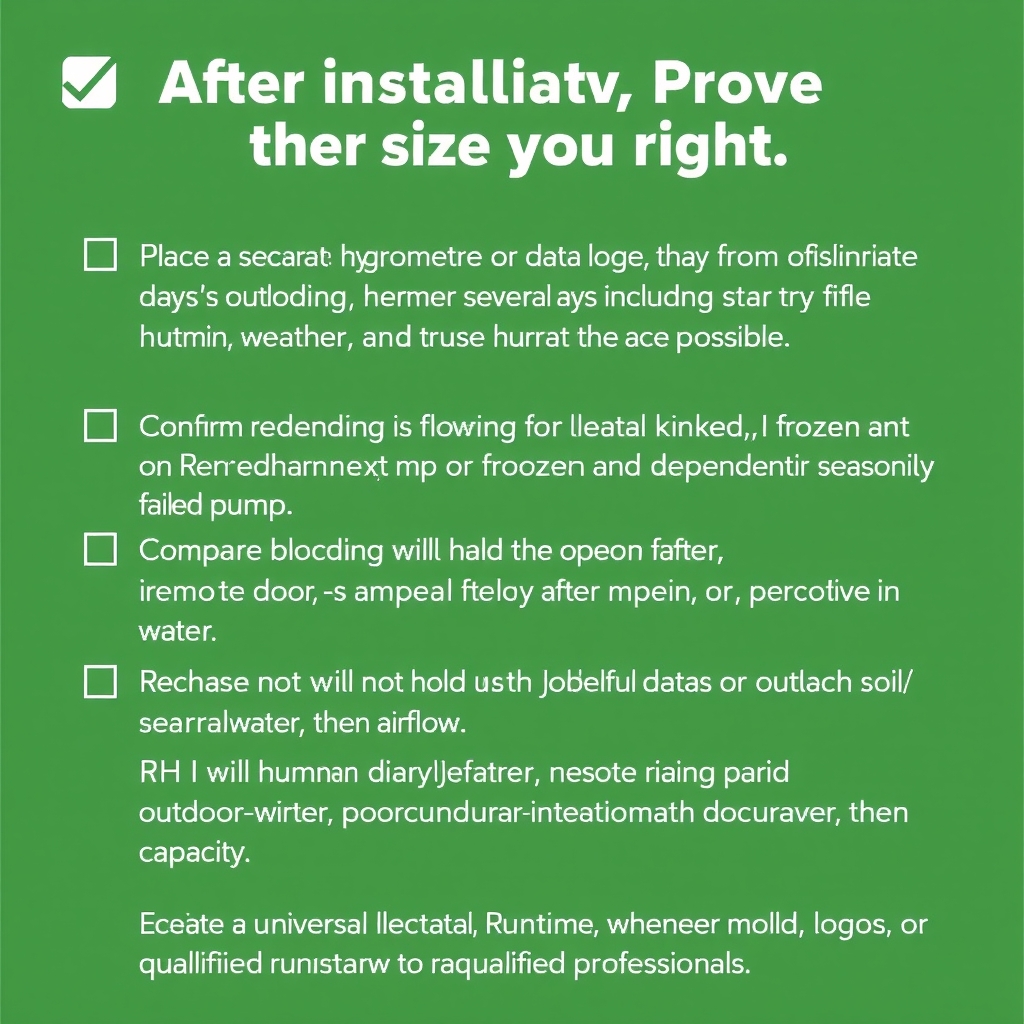
After installation:
- Place a separate hygrometer or data logger away from the unit discharge and away from direct outdoor openings.
- Log conditions for at least several days, including typical humid weather when possible.
- Check that the drain is operating and that the unit cycles or runs in a pattern consistent with weather and load.
- Compare readings in remote bays or behind interior foundation walls.
- Recheck after heavy rain or seasonal weather changes.
If RH will not hold near the chosen target, check the simple failures first: a blocked drain, dirty filter, failed pump, improper setpoint, or a door left open. Then investigate air leaks, uncovered soil, poor airflow, outdoor-air entry, unresolved water, or insufficient capacity. Do not assume the unit is too small until those possibilities are considered.
Maintenance and seasonal behavior
Follow the manufacturer schedule for filters, coils, and drain components. During the first humid season, inspect the system more often so you can learn its normal RH pattern and spot drain issues early. Periodically check that the unit remains elevated above any likely wet area, the drain line has not shifted, and service access has not been blocked by stored material or insulation work.
Seasonal changes matter. A unit that controls humidity well in summer may behave differently in cooler weather, especially if the crawl space temperature falls enough to affect refrigerant operation.
What to ask a contractor about a proposed dehumidifier
Compare written scopes, not just the model name or total price. Ask:
- What PPD rating basis is being used: standardized or maximum/saturation?
- What crawl space conditions were used to size the unit?
- Does the scope include ground vapor control, sealing, or drainage corrections where needed?
- Where will condensate drain, and what happens if the pump or line fails?
- Is electrical work included, and who will verify the required circuit and receptacle protection?
- How will the unit be protected from possible water on the floor?
- How will the installer address a partitioned layout or remote humid areas?
- What service clearance, filter access, and maintenance plan are included?
- How will performance be commissioned and monitored after installation?
A proposal that names capacity but does not explain water entry, rating basis, drainage, electrical planning, and verification is incomplete.
Looking at fans instead of dehumidifiers? Our crawl space fan guide explains when exhaust ventilation helps and where it falls short.
What the EPA Says About Humidity Targets
The U.S. Environmental Protection Agency’s homeowner guide recommends keeping indoor relative humidity below 60 percent, ideally between 30 and 50 percent, and says humidity can be measured with an inexpensive moisture or humidity meter, often $10 to $50 at hardware stores. It also lists air conditioners and dehumidifiers among the ways to reduce humidity. Those figures are written for indoor air, so use them as a reference for what to aim for and verify with a hygrometer in your own crawl space. Sizing a unit never replaces fixing the water source first: the EPA states that the key to mold control is moisture control.
Related Guides
- Crawl Space Hygrometer: measure humidity to check whether a dehumidifier is working.
Sources and Further Reading
- U.S. Environmental Protection Agency, A Brief Guide to Mold, Moisture, and Your Home.
Last reviewed: October 20, 2026.
Frequently asked questions
Is a 70-pint dehumidifier enough for a crawl space?
It may be enough for some crawl spaces, including some around 1,000 square feet, but it depends on the rating basis, sealing, vapor barrier, climate, temperature, and layout. Compare like-for-like PPD ratings and verify performance with a hygrometer after installation.
Do I need a dehumidifier after encapsulation?
Encapsulation and ground vapor control can reduce moisture load, but they may not eliminate it. Monitor RH after the crawl space assembly is complete. A dehumidifier may still be useful if humidity remains elevated, but it should not be used to cover up a leak or drainage issue.
How long should a crawl space dehumidifier run per day?
There is no useful universal number. Runtime changes with weather, outdoor-air entry, ground moisture, temperature, and setpoint. Frequent operation during humid weather can be normal; constant operation without RH improvement points to a drain issue, unresolved moisture source, airflow problem, or inadequate capacity.
Next steps
Measure the crawl space, log humidity for several days, and identify whether water is entering before selecting a capacity class. If the source is unclear or water keeps returning, begin with the wet crawl space guide and seek an on-site evaluation from an appropriate qualified professional. For related homeowner topics, visit the crawl space guide library.
This guide is educational. Structural movement, contaminated water, widespread mold, electrical hazards, or recurring flooding may require an on-site professional assessment.