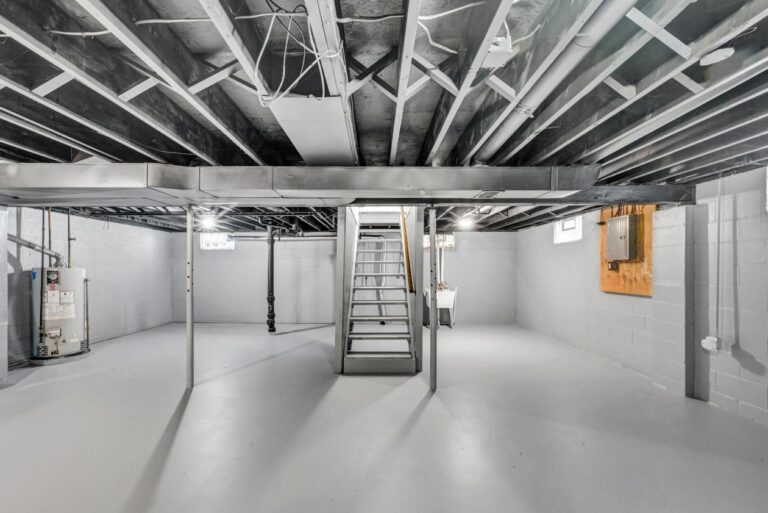
Crawl space waterproofing cost is a scope decision, not a product price. Here is how to match the moisture pathway to the right work, read a quote, and avoid paying for a system your crawl space does not need yet.
Use an AI assistant to explore the article
Choose an assistant. The article link and a ready-to-use summary prompt will be copied automatically.
 ChatGPT
 Gemini
 Claude
 Perplexity
 Grok
Table of contents
Two homeowners with similarly sized crawl spaces can receive quotes that differ by thousands of dollars, and both bids can be honest. That happens because "crawl space waterproofing" describes a goal, not a defined package of work. One bid may cover a ground vapor barrier. Another may cover a sealed space with a dehumidifier. A third may add a drainage trench and a sump pump.
So the more useful question is not "what does crawl space waterproofing cost?" but "what scope does this number buy, and does that scope match what is happening under my floor?" This guide separates the jobs bundled under the word waterproofing, maps common observations to likely scopes, and gives you a way to compare bids line by line. If you are still figuring out what you are looking at, start with our guide to wet crawl space signs.
The Short Answer: Crawl Space Waterproofing Cost Is a Scope, Not a Sticker Price
There is no universal price, because a quote total is set by scope, site condition, access, and local labor rather than by square footage alone. Two bids for the same footprint can describe entirely different work: covering the soil, sealing the space, correcting drainage, repairing a leak, or some combination.
You will see national averages online. As of September 2026, the pages reviewed for this topic were published almost entirely by companies that sell crawl space work, and their published totals vary because each page defines scope, region, and inclusions differently. We did not find a neutral, scope-qualified national cost source in that sample. That is why this article gives you the cost architecture and a comparison method instead of a benchmark number. When someone hands you a figure, your first question should be which tier it describes.
What "Waterproofing" Means in a Crawl Space Quote
In practice, four different jobs get sold under the word waterproofing. They solve different parts of a moisture problem, and they are not interchangeable.
- Water management: moving liquid water away from and out of the crawl space.
- Vapor control: limiting soil vapor and moisture diffusion through the floor of the space.
- Humidity control: managing moisture already in the air.
- Air sealing and insulation: changing how the space exchanges air with the house and outside.
A quote that quietly substitutes one job for another is one common reason a homeowner pays for work and still has a wet crawl space afterward.
Vapor Barrier: Limits Ground Vapor, Not Liquid Water
A ground vapor barrier is a sheet material laid over the soil to slow moisture moving upward from the ground as vapor. It is a vapor control measure. It is not a liquid-water barrier, and it does not stop surface runoff, groundwater, or a leaking pipe.
What changes the material cost is the specification: the product type and thickness stated in the bid, whether the barrier is fastened and sealed at seams and edges, and whether it covers the floor only or continues up the walls. Product thicknesses and code-minimum requirements vary by product and jurisdiction, so a bid should name a specific product rather than just a description.
Encapsulation: A Sealed-Space Strategy With Variable Components
Encapsulation is a broader strategy rather than one fixed package. Depending on the property and the design, it may include a heavier ground liner, wall coverage, sealing of vents, changes to insulation, and humidity control equipment. Contractors use the same word for scopes that differ substantially.
That is the key point for pricing: "full encapsulation" on one company’s proposal may include a dehumidifier and wall liner, while the same phrase on another may describe a thicker floor-only liner. Neither is automatically wrong, but they are not comparable until you itemize them.
Drainage and Sump Systems: For Liquid Water
Interior drainage trenches, French drains, and sump pumps address liquid water. They route water to a collection point and then to a discharge location. They do not control soil vapor or humidity, and a vapor barrier does not manage liquid water. These items are frequently quoted as separate line items, and they need a discharge plan that accounts for where the water goes, freezing conditions, and whether it can recirculate back to the foundation.
Dehumidification and Ventilation: For Humidity and Condensation
A dehumidifier manages moisture in the air. It is not flood control, and it will not keep up with recurring standing water. Whether a sealed crawl space needs one depends on climate, how the space is built, and how it is conditioned; ventilation choices depend on the same factors plus local code. There is no universal answer, no universal sizing rule, and no universal instruction to close every vent.
Match the Moisture Pathway Before You Compare Prices
Different evidence points to different scopes. The table below is a starting point for a conversation, not a diagnosis of your house.
| What you notice | Plausible pathway | Where the money usually goes | Who should look |
|---|---|---|---|
| Water appears after heavy rain, or along a foundation wall | Surface runoff, grading, downspouts | Exterior water management, grading, extensions, possibly exterior or interior drainage | Contractor who installs drainage; you can observe grading and downspouts safely |
| Standing water that lingers, or returns without rain | Groundwater, high water table, hydrostatic conditions | Drainage trench and sump with a discharge plan, which is a prerequisite to sealing | Qualified drainage or crawl space specialist on site |
| Dampness that continues in dry weather, staining, or a drip you can trace | Plumbing, HVAC condensate, or appliance leak | Source repair first, by the appropriate trade | Licensed plumber or HVAC technician |
| Musty odor, damp insulation, or condensation on ducts without liquid water | Ground vapor, elevated humidity, humid-air condensation | Vapor control plus humidity control, after checking for liquid water | Crawl space specialist; you can monitor with a hygrometer |
| Sagging, bouncy, or visibly displaced framing | Structural movement | On-site structural evaluation before any moisture work | Licensed structural or foundation professional |
Water After Rain or Along a Foundation Wall
Water that appears only after storms often points to exterior drainage: soil sloping toward the house, downspouts discharging near the foundation, or a gutter that overflows. Grading and downspout corrections are the least invasive items on this list and are worth verifying before anyone sells you an interior system. If the exterior corrections are done and water still reaches the crawl space, interior drainage may be the next step.
Standing Water or High Groundwater
Standing water that returns without rain suggests groundwater rather than runoff. This is the scenario where sealing work should wait. Covering soil or lining walls while water keeps arriving can trap moisture against framing and hide damage rather than solve it. Drainage or sump scope is often a prerequisite, and it should be priced as its own line with a clear discharge plan.
Plumbing, HVAC, or Appliance Leaks
Leaks that continue in dry weather are a plumbing, condensate, or appliance issue. Repairing the source is usually the cheapest and most effective step, and it should come before any liner or sealing work. Sweating ducts are a different mechanism: that is condensation on a cool surface in humid air, and it points toward humidity and insulation decisions rather than a leak repair.
Musty Odor, Condensation, or Damp Insulation Without Liquid Water
Moisture problems can be real without a puddle: soil vapor, elevated relative humidity, and condensation on cool surfaces all matter. These often point toward vapor control and humidity control rather than a drainage project. Visible growth and a musty smell warrant attention, but appearance alone cannot tell you what the growth is or how far it has spread. The U.S. Environmental Protection Agency’s Brief Guide to Mold, Moisture and Your Home centers on finding and fixing the moisture source. Extensive, recurring, or contaminated growth calls for qualified assessment rather than a cost article.
Order of Operations: Fix the Water Source Before Sealing the Space
Sequence affects both price and outcome. A sensible order looks like this:
- Identify the pathway. Confirm whether you are dealing with liquid water, vapor, or humidity before agreeing to any scope.
- Correct the active source. Fix the plumbing or condensate leak, adjust grading, extend downspouts, and move discharge away from the foundation.
- Install drainage or a sump if liquid water persists. This is water management, and it is usually a separate line item.
- Add vapor control. Ground coverage, and wall coverage if the design calls for it, once the space is not taking on liquid water.
- Consider a sealed-space strategy and humidity control. Sealing and dehumidification come after the water question is settled, not instead of it.
Sealing over an active leak is an expensive mistake and can hide deterioration behind a liner until a later inspection or a floor problem brings it up.
What Drives Crawl Space Waterproofing Prices
Once you accept that scope sets the number, the drivers become easier to read. Listed roughly in order of typical impact.
Size, Height, and Access
Footprint determines material quantity, but clearance and access often determine labor hours. A low space, a narrow entry, and a floor crowded with ducts, piers, and wiring all slow the work. Contractors price the hours, not just the square footage.
Cleanup, Debris, and Old Insulation Removal
Removing wet insulation, debris, and failed barrier material is labor plus disposal. If the old insulation is contaminated or heavily degraded, handling precautions change the scope, and that should appear as its own line.
Liner Thickness and Coverage
Product thickness, reinforcement, and whether coverage is floor-only or floor-and-walls change the material cost substantially. Ask for the product name and specification rather than a generic description, and be skeptical of a bid that gives only a thickness number without coverage details.
Vent Sealing and Insulation Choices
Vented versus sealed assemblies and where insulation goes are climate- and code-dependent. Closing vents is not a universal fix, and insulation placement matters because it changes where the dew point falls. Local requirements and the specific assembly should be stated in the proposal.
Dehumidifier Class, Drain, and Electrical
Capacity, drain method, controls, and electrical requirements all affect price. A unit that must be manually emptied is a different commitment than one with a managed drain line, and adding a circuit is electrical work. Verify the model specification against the manufacturer’s current documents before accepting a proposal.
Drainage, Sump, and Discharge
Trenching, the sump basin, the pump, any backup, the discharge route, and related electrical work should be itemized separately. These items address liquid water and should never be folded silently into a vapor control line.
Permits, Code, and Local Labor
Permit requirements, inspection steps, and labor rates vary by jurisdiction and region. A proposal should say who pulls permits and what inspections are expected, or state that none are required locally.
Scope Tiers: What a Low, Mid, and Full Quote Should Include
| Tier | Typical content | Addresses | Does not address | Who assesses or installs |
|---|---|---|---|---|
| Targeted repair and ground cover | Source repairs, grading or downspout corrections, and a properly installed ground vapor barrier | A defined leak, exterior water entry, and soil vapor | Groundwater, condensation, structural issues | Appropriate trade for the source; crawl space contractor for the barrier |
| Sealed space with humidity control | Ground and wall coverage, vent strategy, insulation changes where designed, and humidity control | Vapor, air exchange, and indoor humidity in a space that is not taking on liquid water | Active liquid water, runoff, groundwater | Crawl space specialist, with electrical work by a licensed electrician |
| Sealed space plus water management | Sealed assembly with drainage trenches, sump, discharge, and qualified handling of growth or damage | Recurring liquid water and the moisture consequences that followed it | Structural repair, which is evaluated separately | Drainage specialist, remediation professional where warranted, structural professional for movement |
No tier is automatically correct. The right tier is the one that matches the pathway you identified.
Planning Ranges Only: How to Read Any Number You See
Published totals you find online are often market samples from companies selling the work, not benchmarks for your house. Without a specific, retrievable source that states its publication date, geography, covered scope, and exclusions, a dollar figure cannot tell you whether it applies to your crawl space.
If you use any figure at all, require four things with it: the source, the publication or observation date, the geography, and the included scope and exclusions. A price without those details is not a useful comparison. Treat every number as a planning placeholder and let the line-item comparison decide.
How to Compare Two Crawl Space Waterproofing Quotes
Two bids with the same headline scope can differ by thousands of dollars because one excludes the expensive parts. Normalize them before you compare totals.
Normalize the Scope
Ask each contractor to restate the bid as labor, materials, equipment, disposal, permits, and exclusions. Then ask directly: what is not included? The excluded list is usually more informative than the included list.
Check the Liner Specification
Confirm product name, thickness, coverage (floor only or floor and walls), seam and edge sealing, fastening method, and how the material terminates on the walls. A proposal that describes "a vapor barrier" without a product or coverage specification is not comparable to one that does.
Check the Dehumidifier Specification and Drain
Confirm capacity, drain method, controls, electrical requirements, and warranty. Verify the model against current manufacturer documentation.
Confirm Drainage, Sump, and Discharge
Ask where water goes, how the discharge line is protected from freezing and from recirculating toward the foundation, and whether a backup pump is included.
Permits, Warranty, and Monitoring
Confirm who pulls permits, what the warranty covers for both labor and materials, what voids it, and what post-installation monitoring the contractor will provide. A warranty that covers materials but not workmanship is a different offer than one covering both.
When You Probably Don’t Need Full Encapsulation
Full encapsulation is not the default answer, and it is usually premature if the water question is unresolved. Proportionate options include:
- Repairing a single identified plumbing or condensate leak.
- Correcting grading and extending downspouts so roof water discharges well away from the foundation.
- Installing or replacing a properly sealed ground vapor barrier where the issue is soil vapor, not liquid water.
- Monitoring relative humidity and odor over a wet season with a hygrometer before committing to a sealed assembly.
If a contractor’s proposal jumps straight to sealing with no explanation of what they found and no plan for an unresolved water source, the scope is probably ahead of the evidence.
DIY vs Professional: Where the Line Falls
Some of this work is observation, and some of it is not. Safe homeowner steps include checking exterior grading, cleaning gutters, verifying where downspouts discharge, and monitoring humidity from outside the crawl space or from a safe, dry, well-lit access point. Some ground-cover work is within reach for a capable homeowner in an accessible, dry, low-hazard space.
The line falls at confined-space entry, standing water near electrical equipment, sewage or suspected contamination, extensive or recurring growth, and anything structural. Those are not DIY conditions, and a poorly sequenced or poorly sealed installation can trap moisture rather than solve it.
Safety and Escalation: Stop and Get Qualified Help
Do not enter standing water where electrical equipment, wiring, or a sump connection may be present. Do not disturb sewage or water you suspect is contaminated. If you smell gas or suspect a gas leak, leave and contact your utility or emergency services. If you see extensive or recurring growth, sagging or bouncy floors, cracked or displaced supports, or significant movement, an on-site qualified professional should evaluate it before anyone sells you moisture work. Structural conditions cannot be diagnosed from a description, a photo, or a quote.
Permits, Code, Climate, Radon, and Combustion Appliances
Permit requirements, vented versus sealed assembly details, and insulation placement vary by jurisdiction, climate, and design. There is no universal rule to apply here, and a proposal should reflect your local requirements.
Two items deserve separate attention. Radon mitigation can sometimes be integrated during sub-membrane work, which may be more practical than adding it later, but radon decisions require testing and a qualified radon professional; see the EPA’s radon guidance. Sealing a crawl space can also affect the air supply available to combustion appliances. That is a design and code question that needs on-site evaluation, not an online determination.
What to Monitor After the Work
Check the space after significant rain and after a wet season, looking for new water, return of odor, condensation on ducts, or a liner that has come loose or pooled water on top. If water returns, that is a scope or source question for the contractor, not something a second layer of liner fixes.
Keep the written warranty, the product specifications, and the monitoring plan together. Recurring water after the work is completed is a signal that the sequence or the scope needs to be reassessed.
Questions to Ask Before You Sign or Pay a Deposit
- What evidence did you observe, and what pathway do you believe is causing the moisture?
- What is the specific scope, and what is explicitly excluded?
- Is any water source still active, and does your plan address it before sealing?
- What exact liner product, thickness, and coverage are you proposing?
- What dehumidifier model, capacity, drain method, and electrical requirement are included?
- Is drainage or a sump part of the scope, and where does the discharge go?
- Who pulls permits, and what inspections apply?
- What does the warranty cover for labor versus materials, and what voids it?
- What monitoring or follow-up is included after installation?
- If structural repair is recommended, who assessed it and what are their qualifications?
Related Guides
- Basement and Crawl Space Waterproofing: which methods fit which water source.
- Crawl Space Repair Cost: costs across different repair types.
- Crawl Space Encapsulation: what the sealed-space approach includes.
Frequently Asked Questions
How much does crawl space waterproofing cost per square foot?
Per-square-foot figures depend entirely on scope, site condition, and location, which is why published figures vary so widely. A ground-cover-only job and a sealed assembly with drainage are not the same unit of work, so a per-square-foot number only means something when the bid states what it includes.
Do I need a dehumidifier after encapsulation?
Often, but not always. It depends on your climate, how the space is built, and how it is conditioned. What is consistent is that a dehumidifier is humidity control, not flood control; it cannot manage recurring liquid water.
Does homeowners insurance cover crawl space waterproofing?
Coverage depends entirely on your policy and the cause of the water. Many policies may treat preventive improvements as homeowner maintenance, but this article cannot tell you how your policy is written. Read the policy and ask your insurer or adjuster before assuming either way.
Does encapsulation lower energy bills or add resale value?
Results vary by home and climate, and published savings percentages and payback figures often come from companies selling the work rather than from neutral field studies. We did not find a neutral, current source we could attribute for either claim, so treat savings estimates with caution and expect resale value to depend on local buyers and the overall condition of the home.
If the source of the water is still unclear, or water keeps coming back after work was done, ask a qualified specialist to document the cause and the proposed scope before you compare or sign any bids. This article is educational and does not replace an on-site evaluation; see our site disclaimer, and browse our crawl space guides for related topics.
This guide is educational. Structural movement, contaminated water, widespread mold, electrical hazards, or recurring flooding may require an on-site professional assessment.