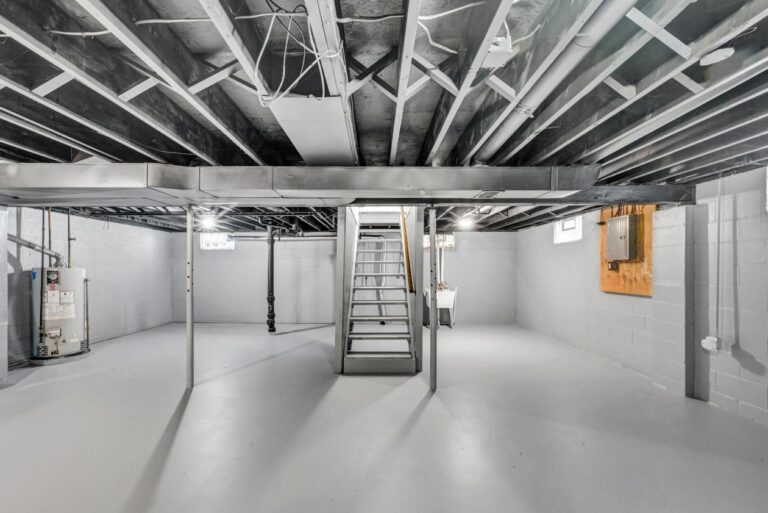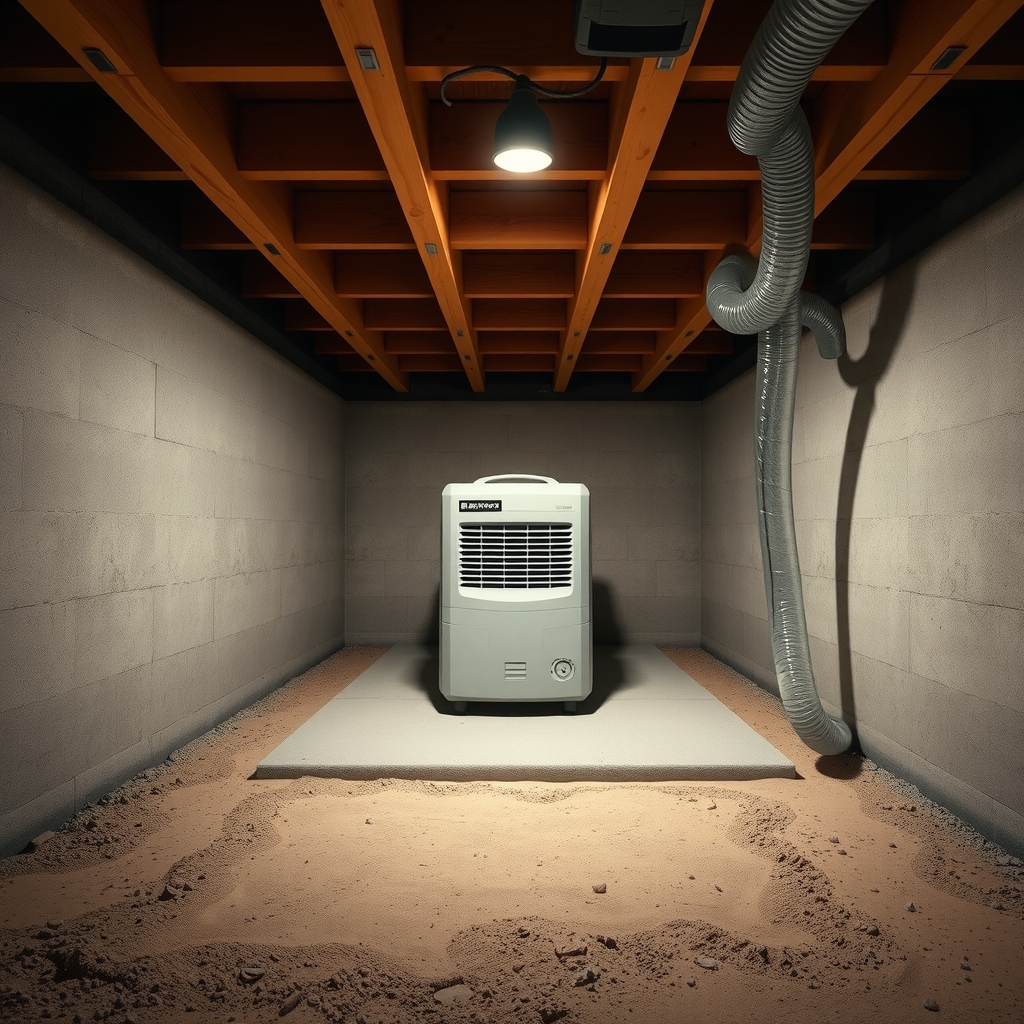
A crawl space dehumidifier is not a universal fix. Use one when airborne moisture is the problem, not standing water or an active leak, and compare units by documented specifications instead of a ranking.
Use an AI assistant to explore the article
Choose an assistant. The article link and a ready-to-use summary prompt will be copied automatically.
 ChatGPT
 Gemini
 Claude
 Perplexity
 Grok
Table of contents
The right crawl space dehumidifier fits a diagnosed moisture problem and the conditions of your space. A dehumidifier removes moisture from air. It does not fix recurring standing water, an active plumbing or HVAC leak, or missing and damaged ground vapor coverage.
That distinction can keep you from buying the wrong equipment first. Start by identifying whether you have liquid water, ground vapor, humid air, or condensation. Then compare available units by documented specifications rather than a universal “best overall” label.
This is a specification-based buying guide, not a hands-on product test. It does not rank models or recommend a universal pint capacity. Instead, it shows you what to verify in current manufacturer literature before you buy.
What “Best” Should Mean for Your Crawl Space
A crawl space dehumidifier can be a reasonable humidity-control tool when water-entry problems have been corrected or ruled out and the remaining issue is persistently damp air. It may help when humidity remains elevated, condensation appears on cool surfaces, or a musty odor persists without visible liquid water.
But the equipment is only one part of moisture control. Drainage manages water moving toward or into the foundation. A vapor barrier limits moisture moving upward from exposed soil. Air sealing reduces uncontrolled outdoor-air entry. A dehumidifier manages airborne moisture that remains after those conditions are addressed.
If water is entering your crawl space, begin with the source. Our guide to a wet crawl space can help you sort through common water-entry patterns before comparing equipment.
First, Rule Out Water a Dehumidifier Can’t Fix
Bulk water and humid air can look similar once materials are damp, but they need different responses. Bulk water includes runoff, seepage, flooding, groundwater movement, and liquid leaks. Relative humidity describes moisture in the air. Condensation happens when moist air meets a surface that is cool enough for water to collect on it.
A dehumidifier may reduce condensation by lowering moisture in the air. It cannot pump out a puddle, repair a leaking pipe, redirect roof runoff, or replace a missing ground cover.
Water That Appears in Wet Weather vs. Water That Never Dries
Water that appears after rain may point toward an exterior drainage path, such as roof runoff, grading, downspout discharge, or water moving along the foundation. Moisture that continues through dry weather may have a different source, including a plumbing leak, HVAC condensate issue, or moisture rising from exposed soil.
Those are clues, not a diagnosis. Track when the condition appears, where it starts, and whether it changes after rainfall or HVAC operation. If the pattern remains unclear, an on-site evaluation can determine whether water management, leak repair, vapor control, or humidity control should come first.
Safe Checks a Homeowner Can Do
From a safe, dry location, you can:
- Note whether soil is merely damp or whether water is pooled or flowing.
- Compare conditions after rain with conditions during a dry period.
- Look for drip marks near plumbing, HVAC equipment, refrigerant lines, or condensate drains.
- Observe staining on insulation, joists, or masonry without disturbing suspect material.
- Check whether downspouts discharge close to the foundation and whether surrounding ground appears to direct water toward the house.
- Use a hygrometer to record relative humidity in more than one area over several days.
Do not enter standing water near electrical equipment, outlets, or wiring. Stop and seek appropriate help if water may be contaminated, sewage is present, gas is suspected, or framing appears unstable.
When a Dehumidifier Fits, and When It Doesn’t
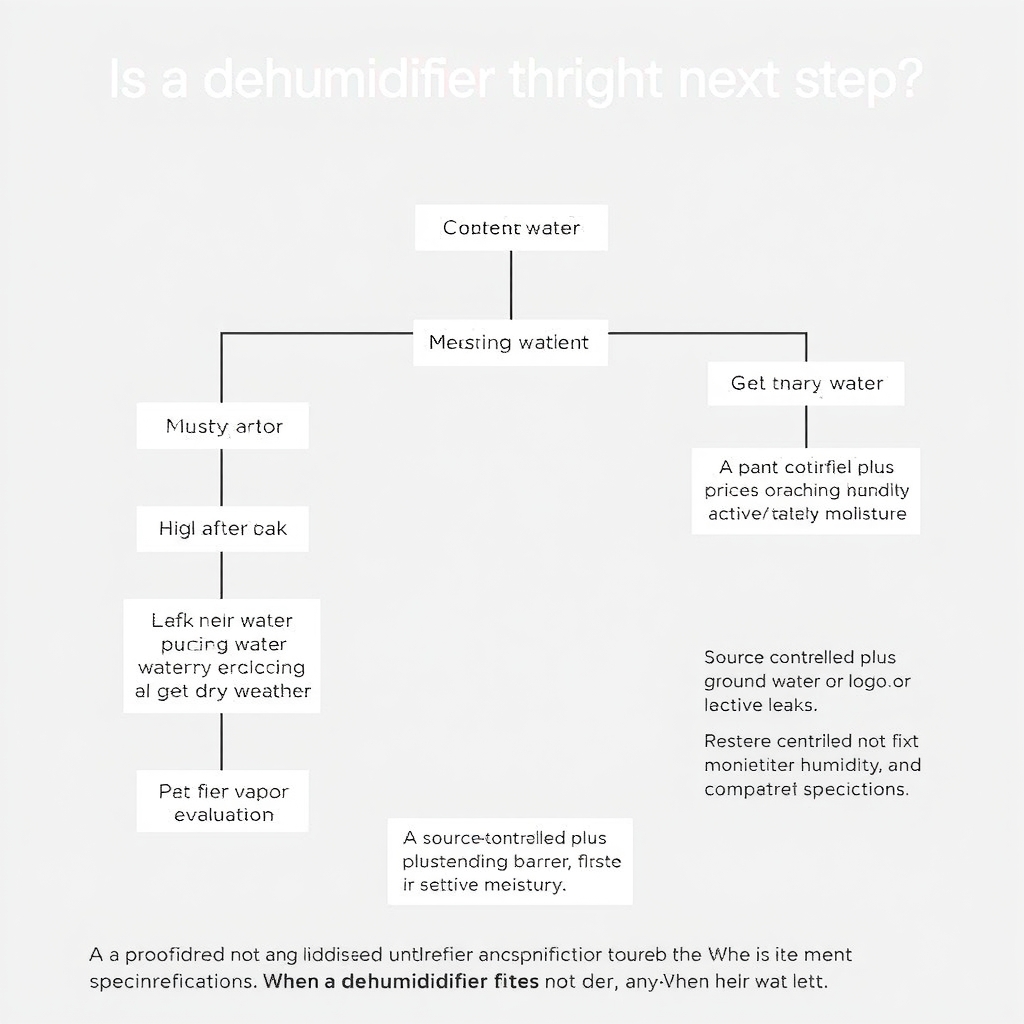
The correct order matters. Buying a larger unit does not make it a substitute for source control.
A Poor Fit Right Now
Some conditions should be corrected or ruled out before you compare equipment:
- Recurring standing water, seepage, or water that follows rain.
- An active plumbing leak or HVAC condensate leak.
- A missing, badly torn, or incomplete ground vapor barrier.
- Obvious water entry from roof runoff, walls, or exterior drainage conditions.
Each item on this list is a source-control question rather than an equipment question. The sensible order is to correct or rule out the source, then decide whether humidity control is still needed. Because a text description cannot determine the appropriate drainage or vapor-barrier scope for a particular house, a condition that keeps returning usually calls for an on-site look before a unit is selected.
Conditions that are unsafe or that need a different kind of professional, such as contaminated water or structural concerns, are covered under the escalation triggers near the end of this guide.
A Reasonable Fit
Humidity control may be proportionate when liquid-water sources have been addressed or reasonably ruled out, ground coverage is in reasonable condition, and the crawl space still has damp air. Common signs include a humidity trend that remains high across different locations, condensation on cool ducts or pipes, or a musty odor without pooled water.
Vent status matters. A sealed, vented, and partially sealed crawl space can behave differently, especially as outdoor weather changes. Open vents and air leaks can introduce humid outdoor air; a sealed space can still gain moisture through access hatches, penetrations, residual ground vapor, or duct leakage. The right response depends on the property and climate.
Why Square Footage Alone Won’t Size a Unit
Square footage is only one input. A sizing chart that treats every crawl space as the same should be used cautiously.
Before comparing capacity, document these conditions:
- Rated pints per day at stated test conditions. Capacity is a rating under stated conditions, not a guarantee of removal in every crawl space.
- Ceiling height and total air volume. Two spaces with the same footprint may contain very different amounts of air.
- Ground vapor coverage. Exposed soil or gaps in the barrier can add moisture load.
- Vent and air-leak conditions. Open vents, access doors, rim areas, and utility penetrations can change the moisture entering the space.
- Duct leakage or mechanical equipment. Leaky ducts or condensate problems can alter humidity conditions.
- Climate and season. Outdoor humidity and temperature affect both the moisture load and equipment operation.
- Ducted versus non-ducted layout. A divided crawl space may need a different air-distribution approach than an open one.
A qualified HVAC or moisture-control professional can use these details to assess whether a proposed unit and layout make sense. If a contractor recommends a size, ask which site conditions they used beyond floor area.
Crawl-Space-Specific Units vs. Portable Home Dehumidifiers
Portable household units are easy to find and may be tempting for a small budget or a short-term test. However, crawl spaces can be low, dirty, cool, hard to access, and prone to corrosion. Those conditions affect service access and equipment suitability.
Crawl-space-oriented units are commonly designed around low-clearance placement, continuous drainage, and maintenance access in confined areas. Some also offer features such as ducting capability, defrost controls, or remote controls. A portable unit may still remove moisture, but you should verify its operating range, drainage arrangement, physical clearance, and intended environment rather than assuming it is interchangeable.
The crawl-space category includes manufacturers such as AprilAire, Santa Fe, and AlorAir, among others. They are named here only as examples of that category. This guide does not test or rank them and does not attribute capacity, price, warranty terms, or performance results to any model.
Online owner reports can raise useful questions about reliability or service, but they are anecdotal. They are not proof that a model will perform a certain way in your crawl space.
Specifications to Compare, Side by Side
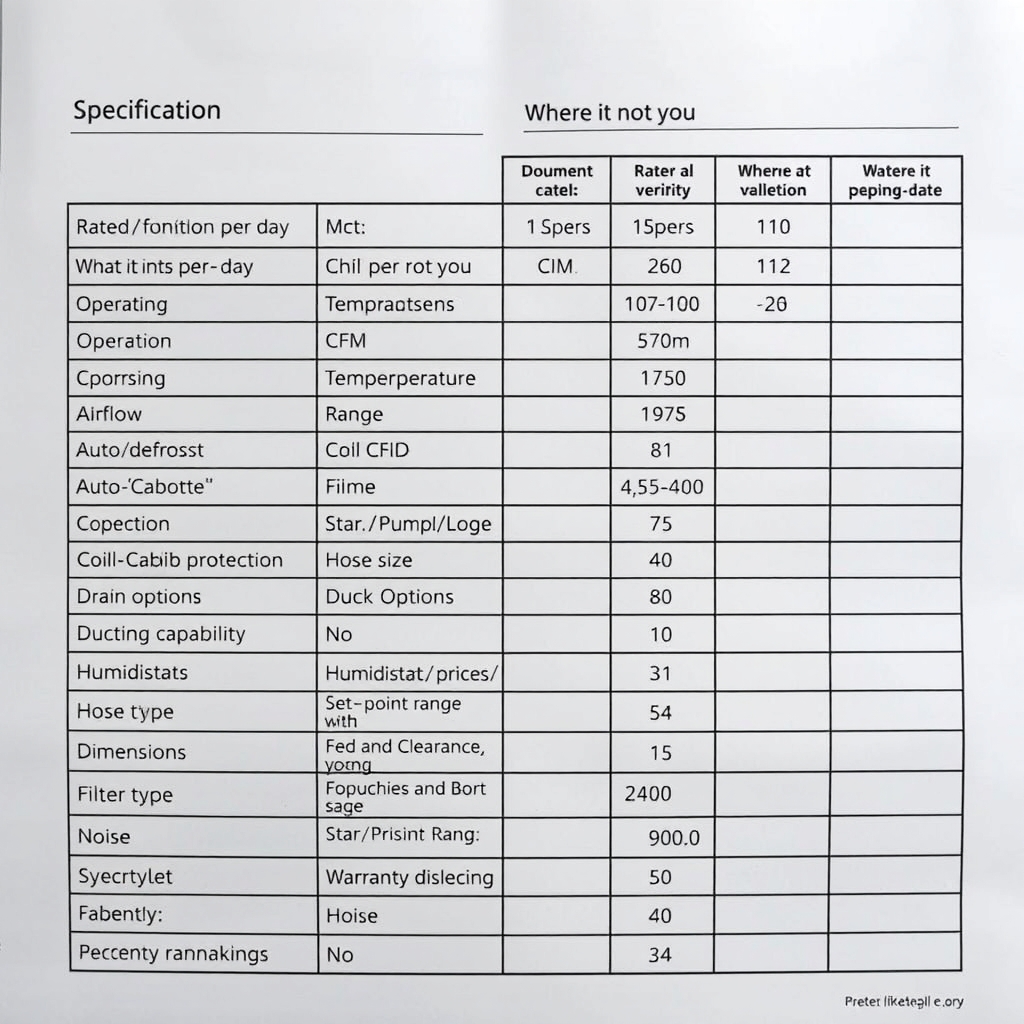
Use this worksheet when reading a current manufacturer specification sheet, installation manual, and warranty document.
| Specification | What it tells you | What it does not tell you | Where to verify it |
|---|---|---|---|
| Rated pints per day | Published moisture-removal capacity under stated conditions | Performance under every real-world temperature and humidity condition | Current specification sheet |
| Airflow (CFM) | How much air the unit is designed to move | Whether air will reach every isolated area | Specification sheet and layout plan |
| Operating temperature range | The conditions the manufacturer states for operation | Whether your crawl space stays in that range | Manual plus local observations |
| Auto-defrost | Whether the unit includes a defrost function | How it will perform in every cold-space condition | Product manual |
| Coil and cabinet protection | Materials or protective features stated by the maker | Long-term durability in your exact environment | Specification sheet and warranty |
| Drain options | Whether gravity drainage, a pump, or accessories are supported | Whether the discharge route is workable at your house | Manual and site layout |
| Ducting capability | Whether the unit can connect to approved duct accessories | Whether ducting is needed or correctly designed | Installation instructions |
| Humidistat controls | Available control and set-point features | Accuracy at every measurement location | Manual and separate hygrometer readings |
| Dimensions and clearance | Whether the unit can fit and be serviced | Whether access is safe or practical | Product dimensions and crawl-space measurements |
| Filter type | Routine filter service needs | The condition of coils and drain components | Manual |
| Noise information | Published sound information, if provided | What you will hear upstairs in a particular house | Manufacturer documents and site conditions |
| Warranty terms | Coverage duration, exclusions, and administrator | Whether an installation or maintenance issue will be covered | Current warranty document |
Do not rely on retailer snippets for these details. Model names, ratings, accessories, and warranties can change. Check the current manufacturer documents for the exact unit you are considering.
Drainage: Gravity, Condensate Pumps, and Failure Points
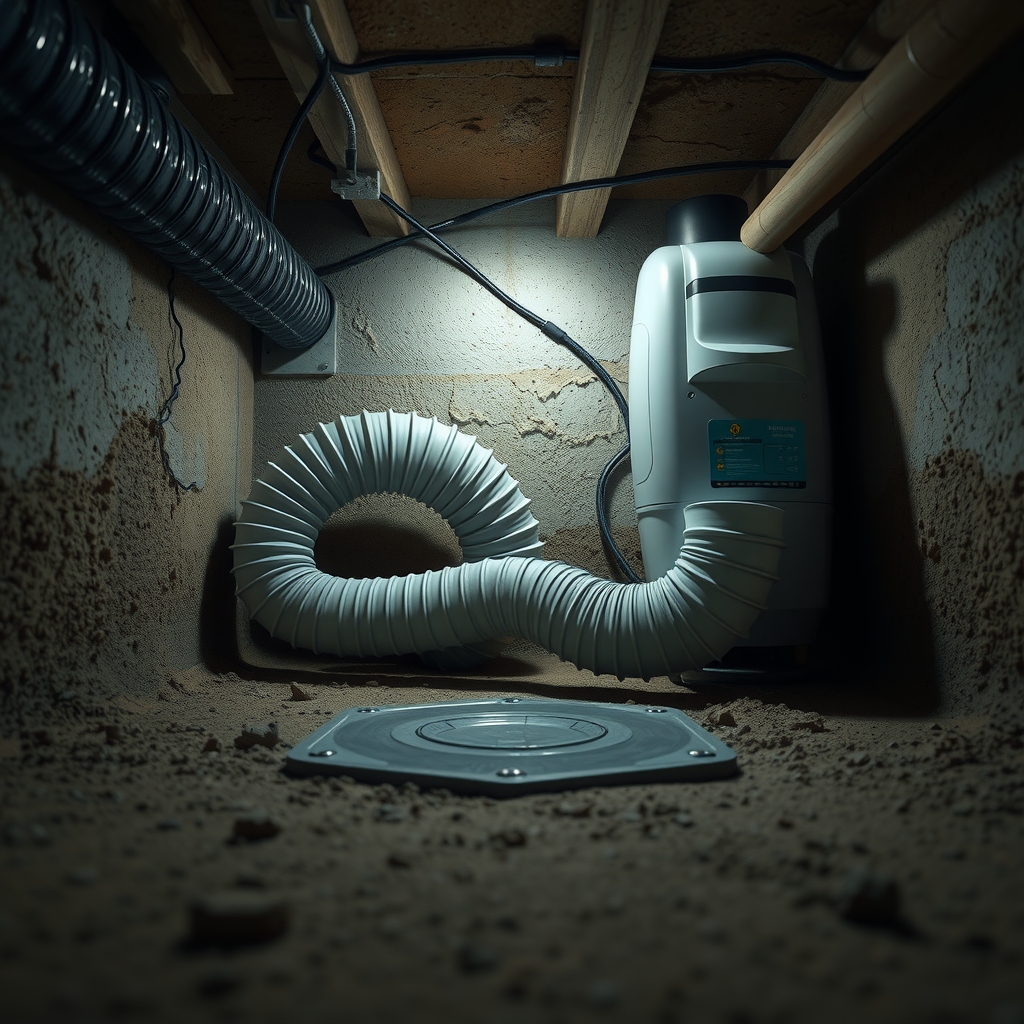
Condensate management is not an accessory detail. If collected water cannot leave the crawl space reliably, a humidity-control system can create a new wet-area problem.
A gravity drain depends on a continuous downhill route to an appropriate discharge location. A line that is kinked, blocked, routed uphill, or exposed to freezing conditions may not drain as intended. A built-in or external condensate pump may be needed where gravity drainage is not practical, but pump selection and discharge routing depend on the property.
Common failure modes include clogged tubing, buildup inside a drain line, a failed pump, a disconnected hose, or a discharge point that sends water back toward the crawl space. During routine checks, look for a secure hose route, signs of leakage, and evidence that drainage is occurring. Do not improvise electrical overflow controls or pump wiring; that work should follow the equipment instructions and, where needed, be handled by a qualified professional.
Placement, Clearance, and Electrical Safety
Place the unit on a stable surface above damp soil and away from splash or water flow. Leave the clearance required by the manufacturer so air can enter and leave the unit, and make sure you can reach the filter, drain connection, and controls for service.
Electrical requirements are not universal. Whether GFCI protection, a dedicated circuit, permits, or electrical changes are needed depends on the unit nameplate, the existing wiring, and the locally adopted code. Confirm the proposed setup with a qualified electrician rather than treating an online installation example as code advice.
Set Points, Monitoring, and Knowing Whether It’s Working
Use a hygrometer to track relative humidity rather than relying on a single reading or a musty smell alone. Put readings in more than one accessible area when possible, record the date and weather pattern, and compare trends over time.
Set-point choices should follow the humidistat instructions that came with your unit. If you see a specific percentage range recommended somewhere, treat it as a starting point tied to the source that published it, not as a universal target. Climate, season, and where you place the sensor all change how a reading should be interpreted, so compare the trend in your own space rather than one number.
A unit appears to be helping when humidity responds over time, the condensate path is functioning, and condensation does not keep returning. A single low reading at the unit does not prove that distant areas are dry.
If humidity remains high, do not assume the equipment is defective. Recheck water entry, vapor-barrier coverage, access and air leaks, duct leakage, drain function, placement, and whether the unit is appropriately matched to the conditions. Persistent uncertainty is a reason for an on-site assessment.
Maintenance and Cost-of-Ownership Drivers
Maintenance needs vary with dust, access, moisture load, and the model’s instructions. A sensible routine includes:
- Cleaning or replacing the filter as the manufacturer directs.
- Inspecting accessible coils and cabinet surfaces for dirt or corrosion.
- Checking the drain line for kinks, leaks, clogs, and secure routing.
- Checking a condensate pump and its discharge path where one is used.
- Looking for new water entry or changes in crawl-space conditions during seasonal checks.
The total cost of ownership is more than the purchase price. Compare the need for professional installation or electrical work, rated power draw, expected duty cycle, local electricity rate, filter costs, pump-related maintenance, and future replacement planning. Record those figures from the exact product documents and your own utility bill instead of relying on generic operating-cost claims.
Do You Need One After Encapsulation?
Not always, and not never. Encapsulation and vapor-barrier work can reduce ground vapor and uncontrolled air movement, but they do not automatically resolve every humidity source. A sealed crawl space may still receive moisture through leaks, hatch gaps, utility penetrations, ducts, or residual moisture pathways.
Likewise, closing vents or changing air sealing can affect radon and combustion-appliance conditions. Those issues should be evaluated locally before a crawl-space enclosure is changed. A dehumidifier can be part of a humidity-control plan, but it does not replace drainage or correct an active leak.
How to Verify a Product Claim Without a Testing Lab
Before you put a model on your shortlist:
- Find the current manufacturer specification sheet and installation manual.
- Write down the published capacity and the test conditions stated beside it.
- Confirm the operating-temperature range for your expected crawl-space conditions.
- Verify whether gravity drainage, a pump, hose fittings, and ducting accessories are included or separately required.
- Read the current warranty document, including exclusions and who administers coverage.
- Compare dimensions and required service clearance with your actual access route.
Review sites and forums may help you identify questions to ask, but they should not replace current manufacturer documentation. This guide does not contain affiliate links.
When to Stop and Call a Qualified Professional
Seek help rather than continuing DIY investigation when you find:
- Standing water near electrical equipment, outlets, or wiring.
- Sewage or potentially contaminated water.
- A suspected gas issue.
- Extensive or recurring mold-like growth.
- Soft framing, major structural movement, or a changing floor condition.
- Repeated drainage or pump failures.
- Electrical work beyond using a plug-in unit on an existing suitable circuit.
A qualified electrician can assess electrical supply questions. A licensed HVAC technician can assess mechanical leaks and equipment installation. Significant framing movement may warrant a foundation or structural engineer. Mold-like growth, especially when extensive or recurring, may call for a qualified remediation assessment. This is educational guidance, not an inspection; see the site disclaimer.
What the EPA Says About Humidity Targets
The U.S. Environmental Protection Agency’s homeowner guide recommends keeping indoor relative humidity below 60 percent, ideally between 30 and 50 percent, and lists air conditioners and dehumidifiers among the ways to reduce humidity. It says humidity can be measured with an inexpensive meter, often $10 to $50 at hardware stores. These figures are written for indoor air, so use them as a reference and verify with a hygrometer in your own crawl space. A dehumidifier does not replace stopping the water source: the EPA says the key to mold control is moisture control.
Sources and Further Reading
- U.S. Environmental Protection Agency, A Brief Guide to Mold, Moisture, and Your Home.
Last reviewed: October 20, 2026.
Frequently Asked Questions
What should I record before calling a professional about crawl space humidity?
Record humidity readings from more than one accessible location, the dates and outdoor conditions, whether moisture follows rain or HVAC operation, and whether the drain line is producing water or showing leaks. Photos from a safe, dry location can also help document pooled water, staining, barrier gaps, or disconnected drainage.
Do I need a dehumidifier in a vented crawl space?
Not automatically. In a vented crawl space, outdoor air moves freely through the space, and that air exchange affects the humidity inside it. Whether humidity control makes sense depends on your climate, the season, the condition of the ground cover, and how the space is built and used. Record readings in the space over several weeks and compare them with outdoor conditions before deciding that a dehumidifier is the right tool.
Can a crawl space dehumidifier run all year?
Whether a unit should run continuously depends on your climate, the season, the humidity you are monitoring, and the operating range the manufacturer states for that unit. Some models include a defrost function for cooler conditions and some do not, so the manual for your exact model is the place to confirm this. A reliable continuous drain matters if the unit will run for long periods, because collected water has to leave the space.
Will a dehumidifier stop mold or rot?
A dehumidifier manages moisture in the air. It is not a treatment for mold or wood decay that is already present, and it does not correct the water source that allowed growth to begin. This guide does not identify mold by appearance or estimate health risk. Material that is already damaged or affected generally needs an on-site assessment to determine what repair or remediation is appropriate.
How loud is one in practice?
Noise depends on the model, the size of the unit, the fan speed, and where it sits. Some manufacturers publish sound information and some do not; where published data matters to you, compare it in the current specification documents rather than from memory or a retailer listing. In a crawl space, the more practical question is often whether the sound reaches living space above, and that depends on the floor assembly and where the unit is placed.
What should I check before leaving a crawl space dehumidifier unattended for a season?
Follow the manufacturer’s instructions, confirm that the drain route is secure and discharging where intended, and make sure the filter and service access are reachable for later checks. If the space has recurring water, an unreliable pump, or an unexplained electrical issue, address that condition rather than relying on unattended operation.
Your Next Step
If the moisture source is unclear or water keeps returning, document the pattern and address that question before buying equipment. If source control is handled and humidity persists, use the worksheet above to compare current manufacturer documents for units that fit your access, drainage, temperature, and service needs.
If you already own a unit and humidity stays high, recheck drainage, maintenance, vapor coverage, air leaks, and water entry before replacing it. For related diagnostic topics, browse the crawl space guide library.
This guide is educational. Structural movement, contaminated water, widespread mold, electrical hazards, or recurring flooding may require an on-site professional assessment.